Secret to happy

Secret to happySecret to happySecret to happy

Secret to happy

Secret to happySecret to happySecret to happy
  • Home
  • About
  • Parents and Caregivers
  • Educators
  • Resources
  • More
    • Home
    • About
    • Parents and Caregivers
    • Educators
    • Resources
  • Sign In
  • Create Account

  • My Account
  • Signed in as:

  • filler@godaddy.com


  • My Account
  • Sign out

Signed in as:

filler@godaddy.com

  • Home
  • About
  • Parents and Caregivers
  • Educators
  • Resources

Account

  • My Account
  • Sign out

  • Sign In
  • My Account

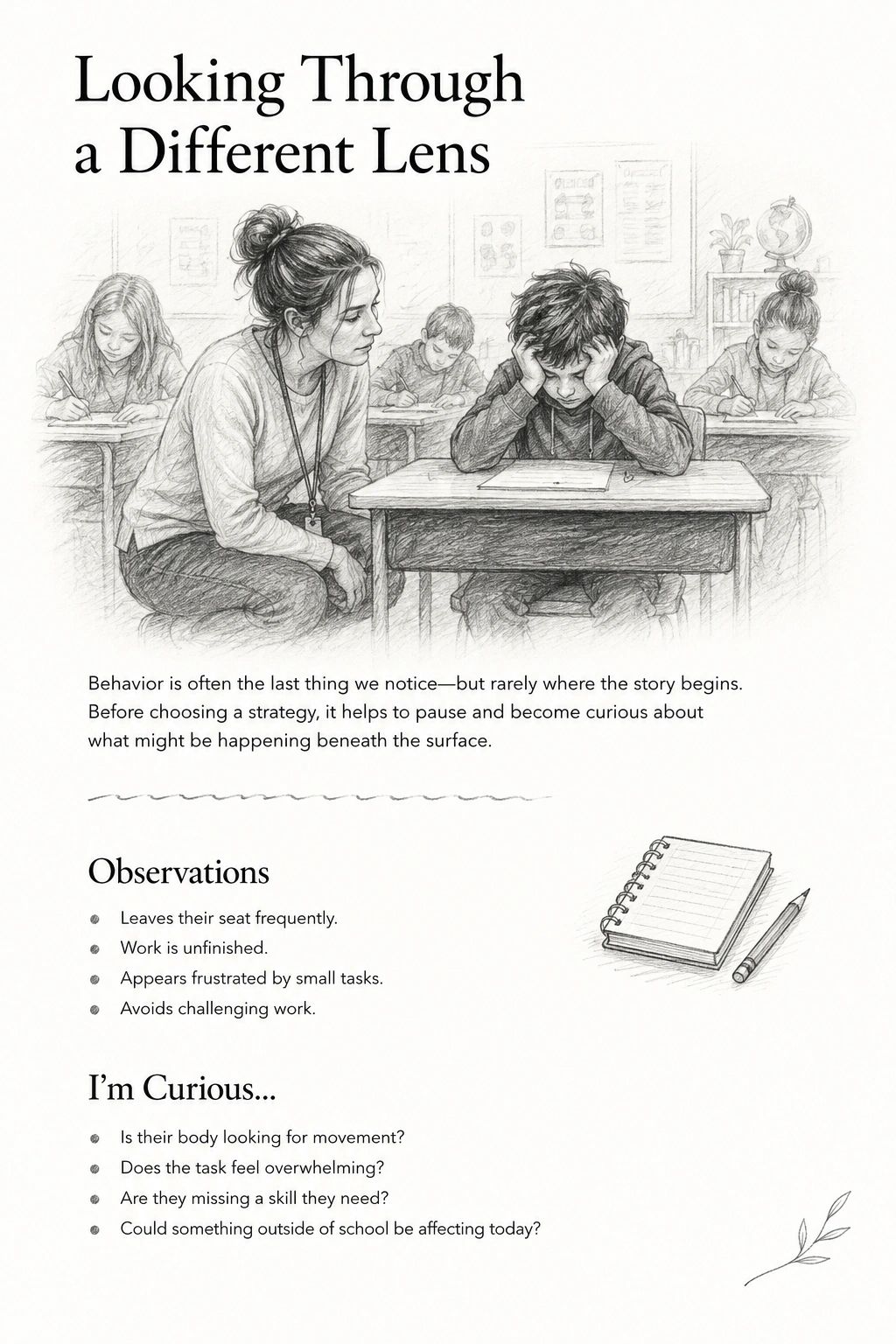
Behavior Provides Information... it only takes one adult to truly SEE a child.


Like a detective, start by gathering clues. 

What do you notice? 

When does the behavior occur? 

What makes it better or worse? 

What strengths does the child have? 

What expectations are being placed on them?


Behavior is often the first clue—not the final answer.


  When an adult finally understands a child they see...

-The humor  behind the impulsivity.

-The leadership behind the bossiness.

-The compassion behind the sensitivity.

-The engineer behind the child who can't sit still.

-The artist behind the daydreaming.


The magic was always there.

Someone just had to see it.


The puzzle pieces in this library will help you consider the many factors that may be influencing a child's behavior so you can choose supports that match their needs.


Remember, our goal is not simply to stop behavior. Our goal is to understand it.

What if the behavior that's driving you crazy is actually the clue you've been missing?

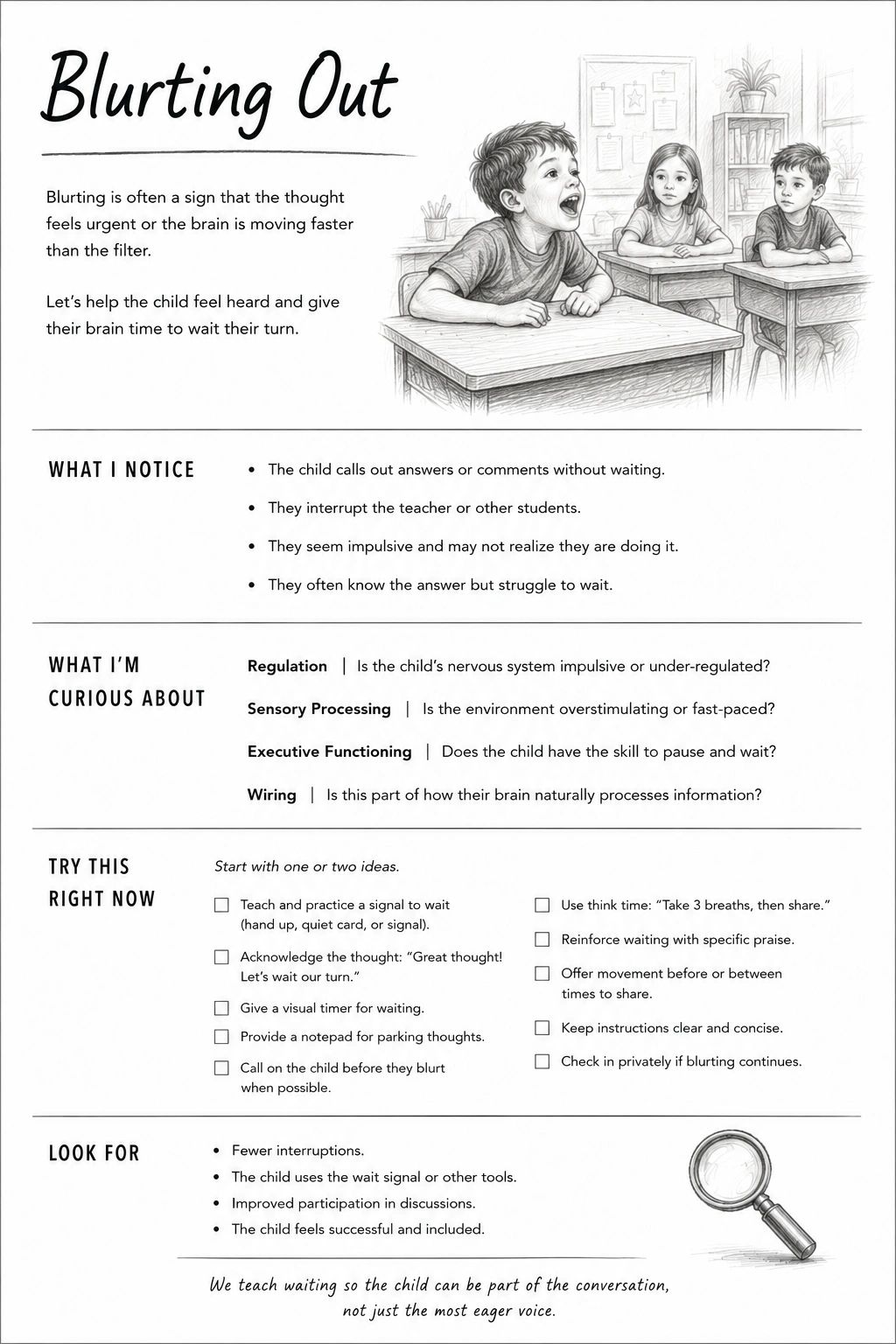
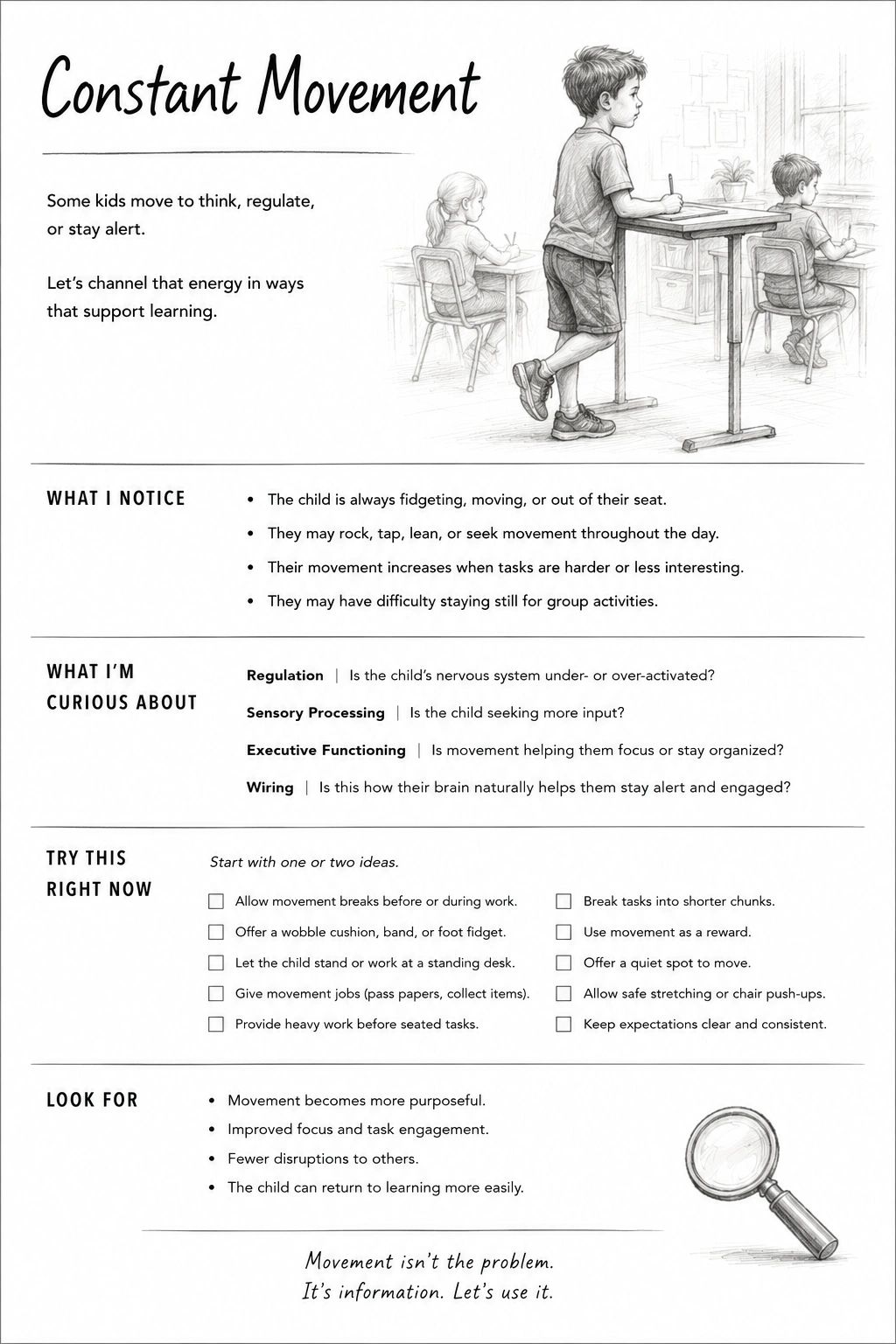
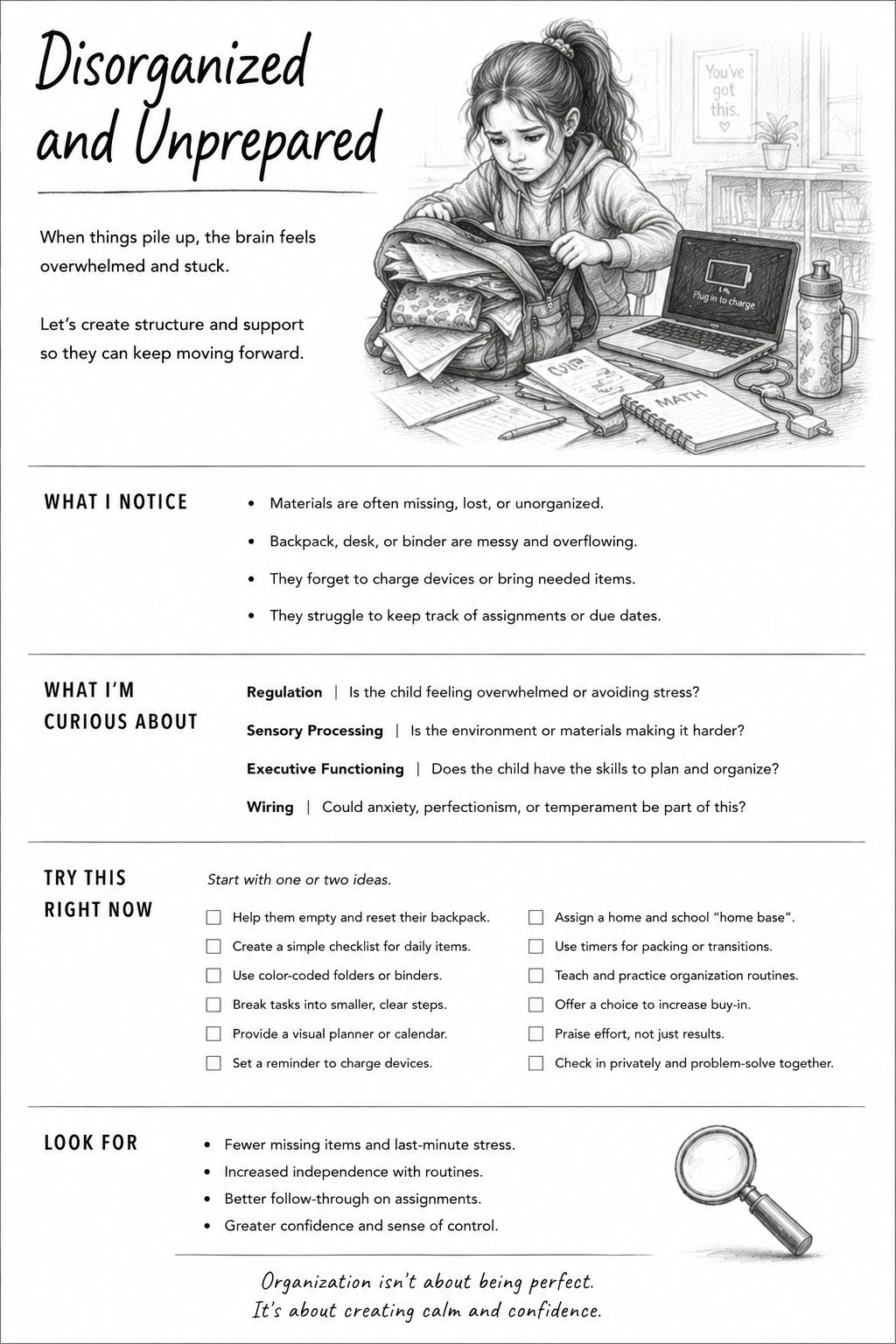
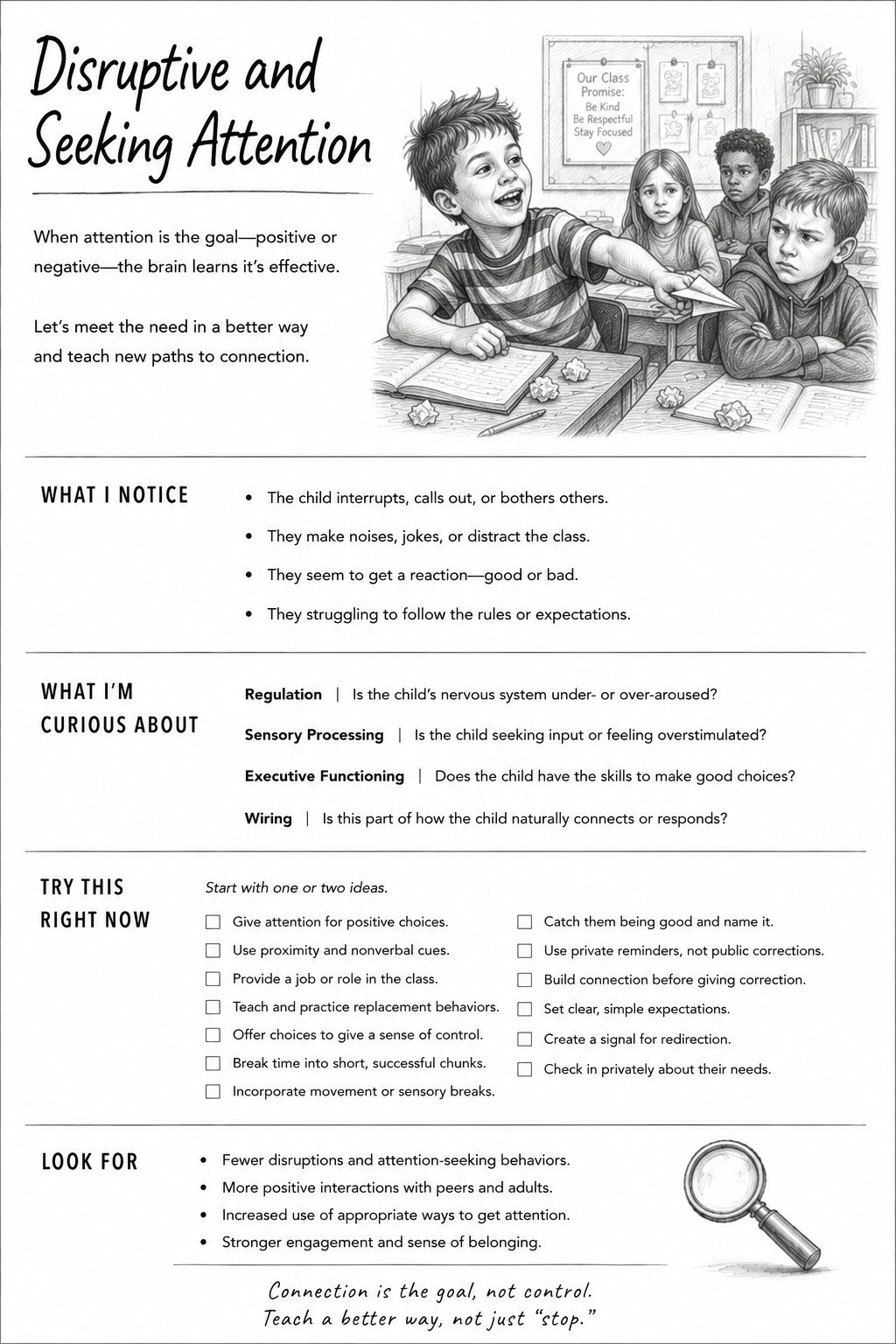
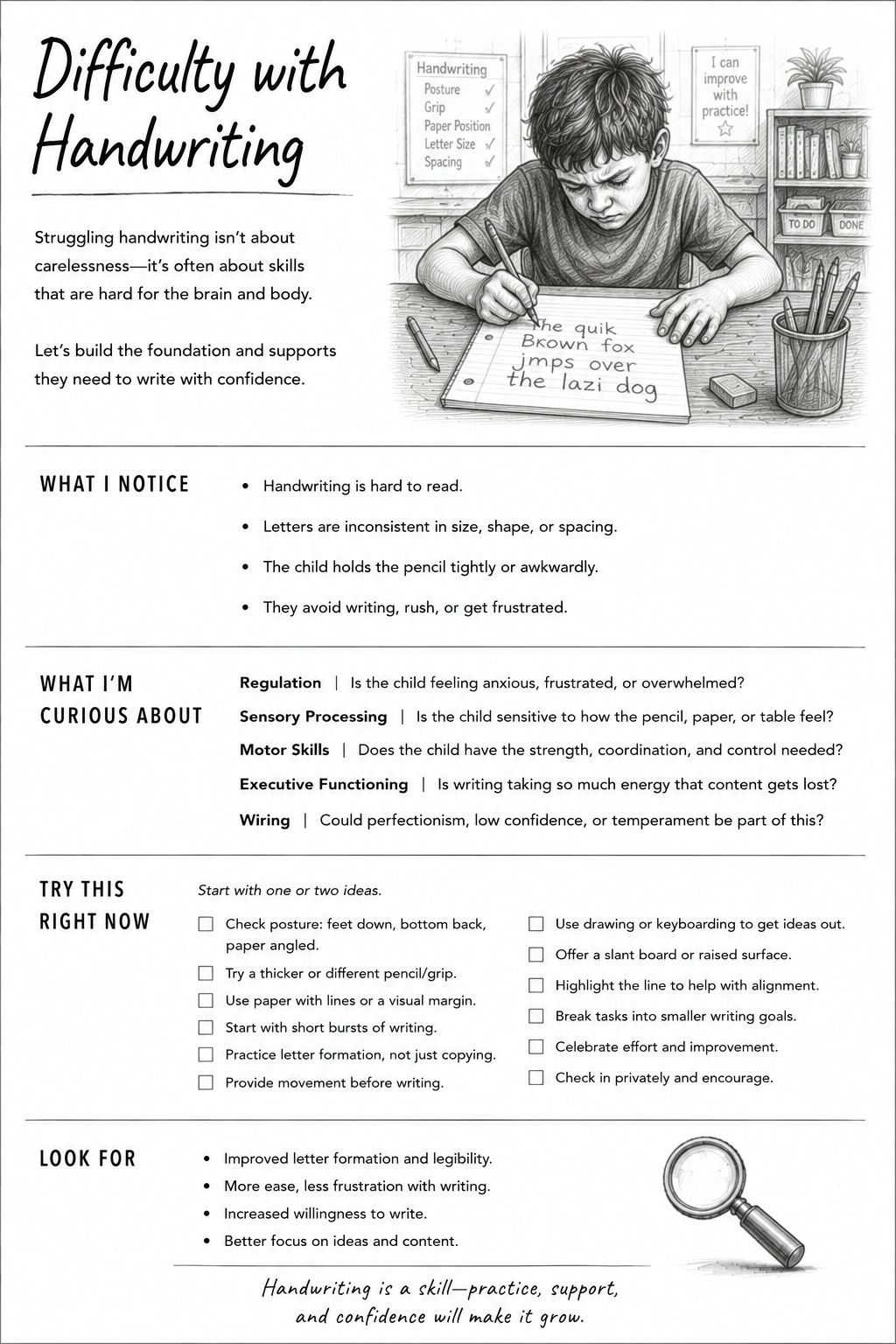
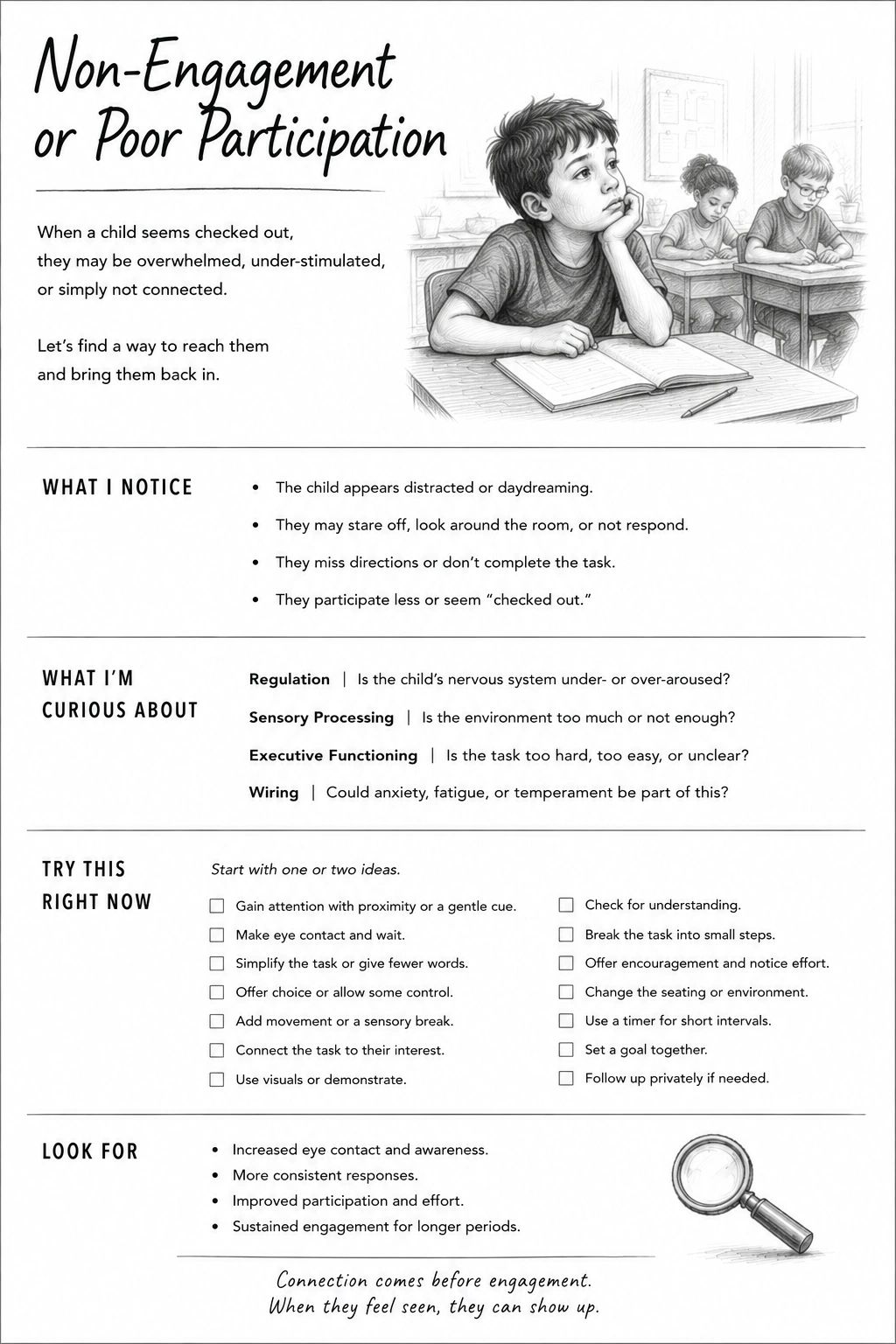
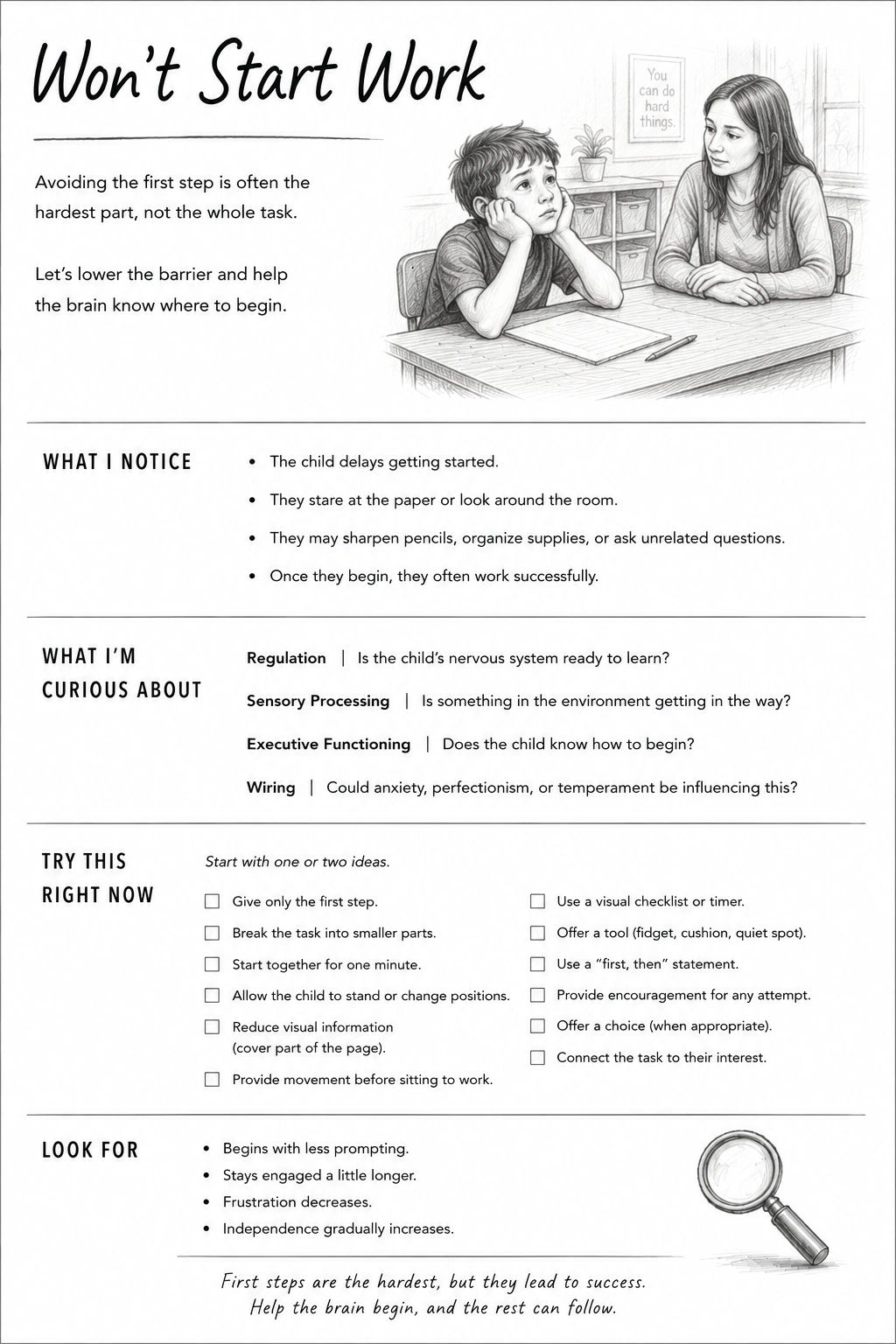
COMMON BEHAVIORS AND A PLACE TO START:

sensory Tools for different learners

How to Decrease the Input of a Space- OR... Dealing with a Fire Dragon

How to Increase the Input of a Space- OR...Dealing with a Sleepy Dragon

How to Increase the Input of a Space- OR...Dealing with a Sleepy Dragon


Sometimes the environment is simply asking too much of a child's nervous system. Small changes can make a big difference.


Reduce visual distractions

  • Dim harsh lighting when possible. 
  • Cover or remove unnecessary visual clutter. 
  • Keep workspaces simple and organized. 
  • Limit the number of materials visible at one time. 
  • Seat the child away from busy areas or windows. 

Reduce background noise

  • Turn off music or unnecessary electronics. 
  • Close doors to reduce hallway noise. 
  • Encourage one person to speak at a time. 
  • Add rugs, curtains, or soft furnishings to absorb sound. 
  • Provide access to noise-reducing headphones when appropriate. 

Reduce movement and activity

  • Create spaces where fewer people are walking by.  Seat student in place where others don't bump their desk
  • Avoid crowded work areas when possible. 
  • Offer a quiet corner for independent work or breaks. 
  • Build predictable routines to reduce environmental surprises. 


Reduce cognitive demands

  • Give one direction at a time. 
  • Break larger tasks into manageable steps. 
  • Limit unnecessary choices. 
  • Allow extra processing time before expecting a response. 

Create a calmer atmosphere

  • Use natural light when possible. 
  • Choose neutral colors and simple décor. 
  • Keep frequently used materials organized and easy to find. 
  • Model a calm, regulated presence.

How to Increase the Input of a Space- OR...Dealing with a Sleepy Dragon

How to Increase the Input of a Space- OR...Dealing with a Sleepy Dragon

How to Increase the Input of a Space- OR...Dealing with a Sleepy Dragon


Some children need more sensory input to help their brain stay alert, focused, and engaged. The goal isn't to create more stimulation—it's to provide the right stimulation.


Increase opportunities for movement

  • Allow students to stand while working. 
  • Offer wobble stools, cushions, or therapy balls for seating. 
  • Incorporate movement breaks throughout the day. 
  • Build movement into learning activities whenever possible. 
  • Encourage jobs that involve carrying, pushing, or delivering materials. 

Provide opportunities for heavy work

  • Carry books, chairs, or classroom supplies. 
  • Push or pull carts, bins, or loaded containers. 
  • Erase whiteboards or clean tables. 
  • Stack chairs or organize classroom materials. 
  • Include wall push-ups or chair push-ups before seated work. 

Offer movement while learning

  • Walk while reviewing information. 
  • Stand during discussions. 
  • Use floor work or alternate workstations. 
  • Allow students to change positions as needed. 
  • Alternate seated tasks with active tasks. 

Use tools thoughtfully

  • Offer fidgets only if they support attention and are not distracting to the student or others. 
  • Provide resistance bands on chair legs for foot movement. 
  • Use weighted lap pads or other supportive tools when appropriate. 
  • Allow access to chewable items or oral motor tools if they help with regulation. 

Increase alerting sensory experiences

  • Open blinds or increase natural light. 
  • Play brief, upbeat music during movement activities. 
  • Offer cold water throughout the day. 
  • Include activities that provide vestibular or proprioceptive input before challenging tasks.

Expectations Matter

Children benefit from high expectations, opportunities to learn, and meaningful challenges.

However, expectations must also be realistic and developmentally appropriate.

A task that is too easy limits growth.

A task that is too difficult often leads to frustration, avoidance, or dysregulation.

Our goal is to help educators identify the just-right challenge—where children feel supported enough to be successful while continuing to develop new skills.


Supports may include:

  • Adjusting the environment 
  • Teaching missing skills 
  • Modifying how a task is presented      
  • Temporarily changing expectations      
  • Increasing adult support 
  • Reducing unnecessary barriers 


As children develop, expectations should grow with them.


Curiosity Means asking Questions:  

  • Should this child be expected to sit for this lesson? 
  • Is this writing assignment at the right level? 
  • Is this transition too demanding right now? 
  • Does this child need more support before we fade it? 
  • Are we asking for independence before the underlying skills are in place? 


"What is the just-right challenge for this child, in this moment?"

  1. Expectations that are too high can set children up to fail. 
  2. Expectations that are too low prevent opportunities to grow. 

This educator resource is designed specifically for the classroom. It offers practical strategies and meaningful insights to support self-regulation and behavior. When behavior is seen through a different lens, it is easier to understand, respond, and support students more effectively. Click the book image to be directed to amazon for purchase

#

Do you work with a student who is struggling?

A woman covering her face with hands, looking stressed at a desk.

PUT YOUR OXYGEN ON FIRST....

  Your perception and expectations for a child are based on your wiring and previous experiences. Helping a child find HAPPY will need to consider why you think as you do.It is just as important to recognize YOUR wiring and threshold needs so that your responses during a moment of stress can be supportive and positive. Self-care is critical for both parents and educators so take care of YOU. Then once you feel strong, consider these specific traits unique to this child:

  • When you identify a child's wiring, you will have a keener appreciation for why they do what they do. 
  • When you figure out their sensory needs or deficits this will determine how you can adjust their environment so they can find success.
  • When you know what skills are weak, you can fill in those holes with coaching, skill building, or allowing them more time to figure it out.​

Behavior and regulation in children...understanding the why

 This short 8-minute introduction video shares the key factors that influence behavior in children so that solutions and strategies can be better utilized. 

Supporting regulation in the classroom

Strategies to help with classroom management and behavior

Click here to Print and Download PDF

Henry's Dragon Book... An audio book

Share this audio book with your students to help them understand why Dragon Training is so important!

Dragon resources

Another option for printing a "Dragon Training Book"

Click here to Print and Download PDF

This video will show you how to create a dragon packet with

New images for dragon training

download and print available in the resources section


 This program helps kids understand how their brain can sometimes take over behavior. It also teaches them ways to recognize those feelings, manage their “dragons,” and regain control so they can feel better and do what they need to do. 


Copyright © 2026 Secret to Happy - All Rights Reserved.

Powered by

  • Home